When you’re near Boston, you’re near the places where lots of America’s great writers lived (and still live)—and the places that inspired the literature we love and learn from.
Nathaniel Hawthorne
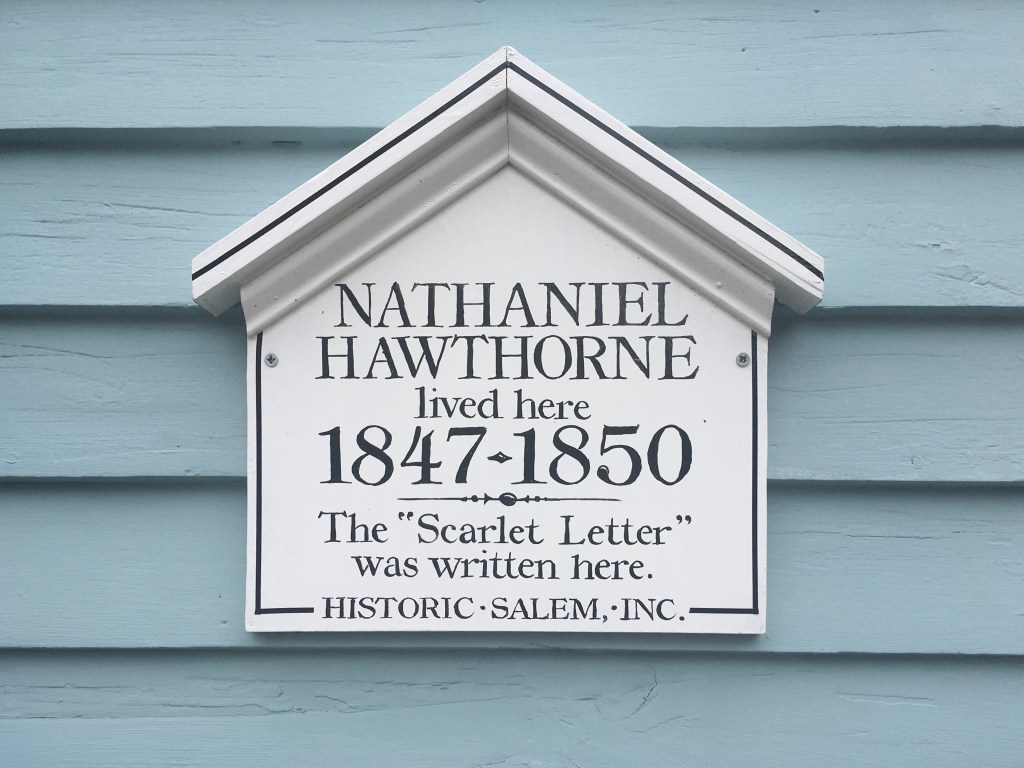
Eight miles south from Wenham is the house in which Hawthorne wrote The Scarlet Letter, and the Custom House, where he worked as Surveyor of the Port, and where is set the first chapter of the novel.
A throng of bearded men, in sad-colored garments, and gray, steeple-crowned hats, intermixed with women, some wearing hoods and others bareheaded, was assembled in front of a wooden edifice, the door of which was heavily timbered with oak, and studded with iron spikes. (1850)

Anne Bradstreet
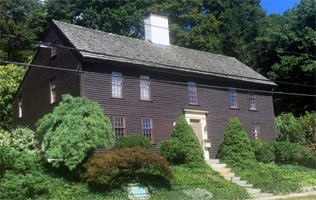
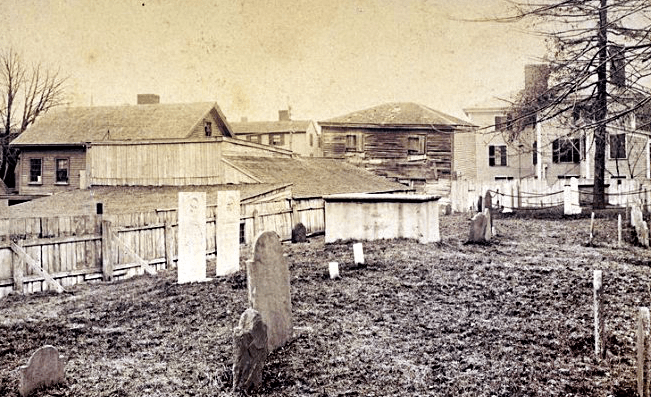
Eight miles north brings you to Ipswich’s High Street, location of more first-period houses than anywhere in America, and home of America’s first poet, Anne Bradstreet, who began her book The Tenth Muse, Lately Sprung Up in America while living here.
If ever two were one, then surely we. / If ever man were loved by wife, then thee. / If ever wife was happy in a man, / Compare with me, ye women, if you can. / I prize thy love more than whole mines of gold, / Or all the riches that the East doth hold. (from “To My Dear and Loving Husband,” 1678)
Louisa May Alcott
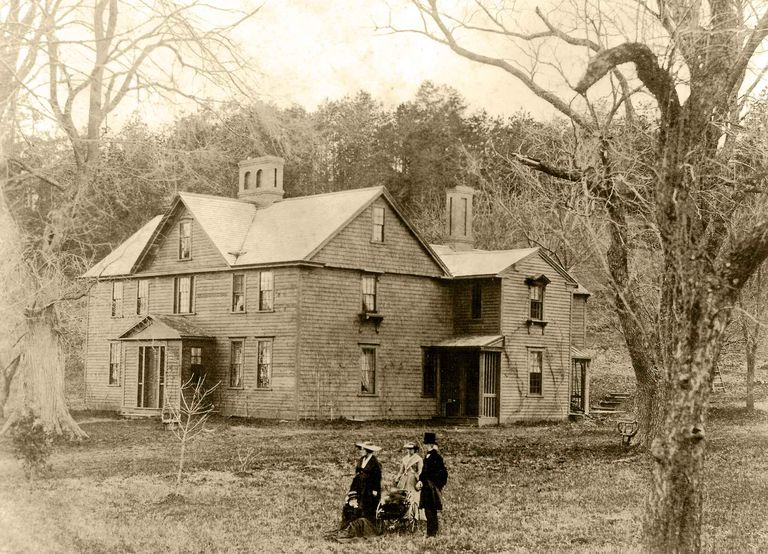
It’s a 32 mile scoot to Orchard House in Concord, home of Louisa May Alcott, and the place where she wrote and set Little Women. The Hawthornes lived nearby in The Wayside. From both houses it’s an easy walk to the North Bridge, where “the shot” was fired.
“Christmas won’t be Christmas without any presents,” grumbled Jo, lying on the rug.
“It’s so dreadful to be poor!” sighed Meg, looking down at her old dress.
“I don’t think it’s fair for some girls to have plenty of pretty things, and other girls get nothing at all,” added little Amy, with an injured sniff.
“We’ve got Father and Mother and each other,” said Beth contentedly from her corner. (1868)
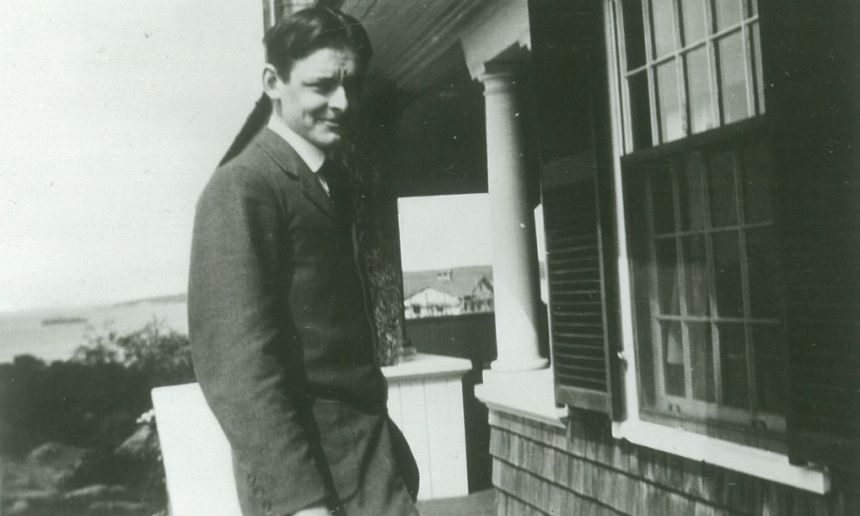
T.S. Eliot
Fourteen miles up the coast bring you to Bearskin Neck in Rockport, where you can see the Dry Salvages, the rock formation that sank ships, and that gave a title to T.S. Eliot’s third of his Four Quartets. Eliot learned to sail in Gloucester Harbor.
The sea howl / And the sea yelp, are different voices / Often together heard: the whine in the rigging, / The menace and caress of wave that breaks on water, / The distant rote in the granite teeth, / And the wailing warning from the approaching headland / Are all sea voices, and the heaving groaner / Rounded homewards, and the seagull… (1941)

John Updike
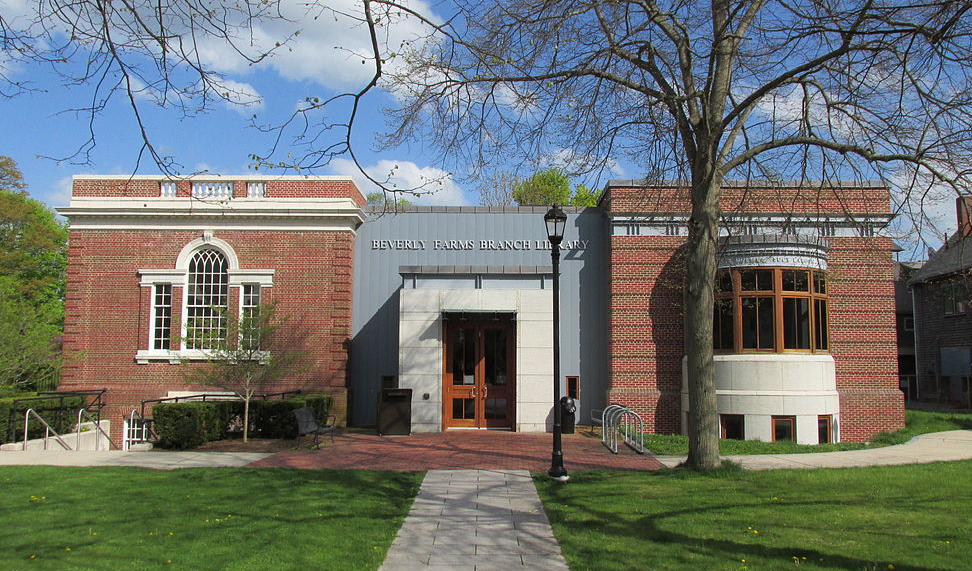
The Pulitzer Prize winner (twice) lived in Ipswich, Georgetown, and Beverly Farms, where he would walk to church at St. John’s and to the bookstore to sign his books. “The book shop in my little town lights up not only my life but the entire street,” he said in a speech.
Boys are playing basketball around a telephone pole with a backboard bolted to it. Legs, shouts. The scrape and snap of Keds on loose alley pebbles seems to catapult their voices high into the moist March air blue above the wires. Rabbit Angstrom, coming up the alley in a business suit, stops and watches, though he’s twenty-six and six three. (opening of Rabbit, Run, 1960)

Two-time winner of the Caldecott Medal for his illustrations in Jumanji and The Polar Express, Chris Van Allsburg lives in the next town over (Beverly). If you stop to read in the Bev Farms library, you may realize he’s sitting at the next table over from you.
On Christmas Eve, many years ago I lay quietly in my bed. I did not rustle the sheets. I breathed slowly and silently. I was listening for a sound I was afraid I’d never hear. (opening of The Polar Express, 1985)
Sylvia Plath
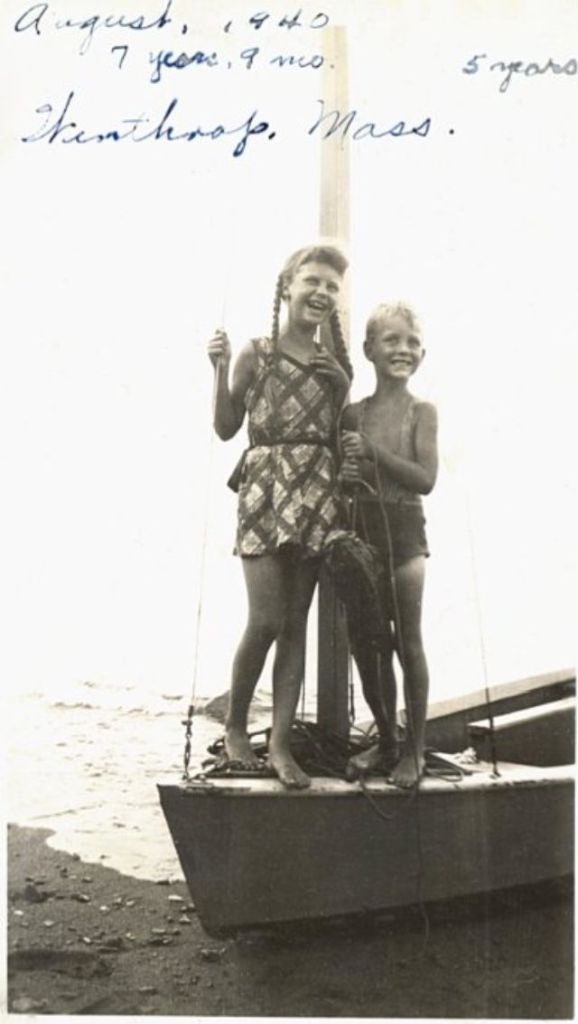
Sylvia Plath said her childhood landscape was not land, but “the end of land, the cold, salt running hills of the Atlantic.” Her town of Winthrop is 25 miles south, fronting Boston Harbor and its noisy airport.
The gritted wave leaps / The seawall and drops onto a bier / Of quahog chips / Leaving a salty mash of ice to whiten / In my grandmother’s sand yard. / She is dead / Whose laundry snapped and froze here… (“Point Shirley,” 1960)
Henry David Thoreau
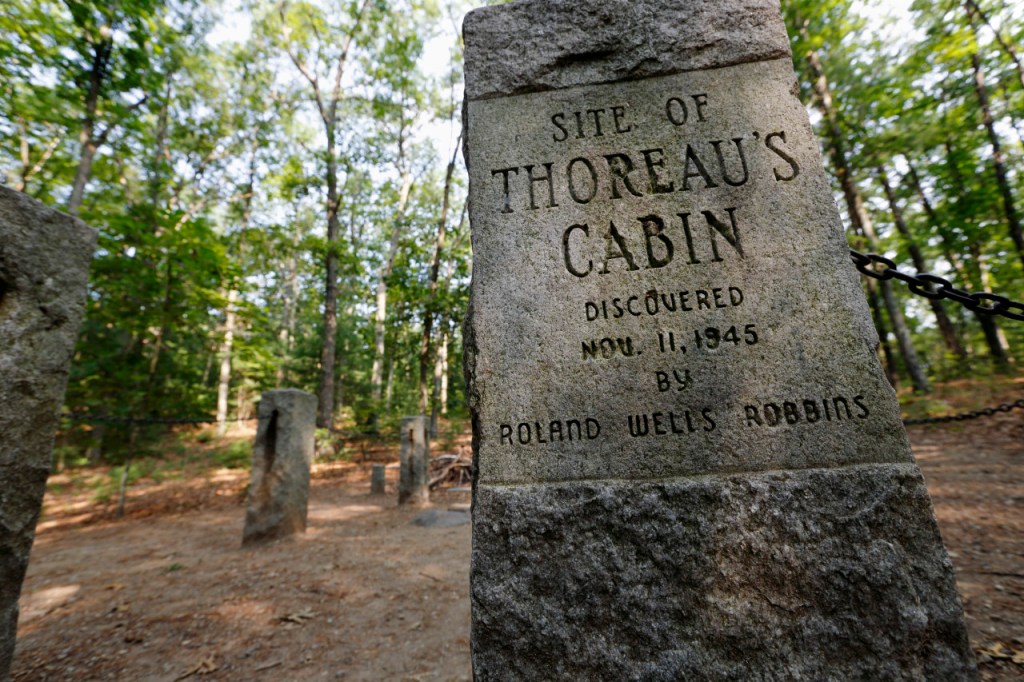
30 miles south is Walden Pond, where you can stroll along the water’s edge to the site of Henry David Thoreau’s cabin. Here Thoreau conducted his two-year experiment in basic living. Bring your copy of Walden.
I went to the woods because I wished to live deliberately, to front only the essential facts of life, and see if I could not learn what it had to teach, and not, when I came to die, discover that I had not lived. (1854)
 Ars Creative Writing